How Much Does It Cost to Install Solar Panels in Australia? 2026 Prices by System Size
Solar quotes in Australia range from suspiciously cheap to eye-watering — for what sounds like the same system. The spread comes down to hardware tier, installer quality and how much rebate is baked into the headline number. Here's what installation genuinely costs in 2026, and how to compare quotes without a spreadsheet.
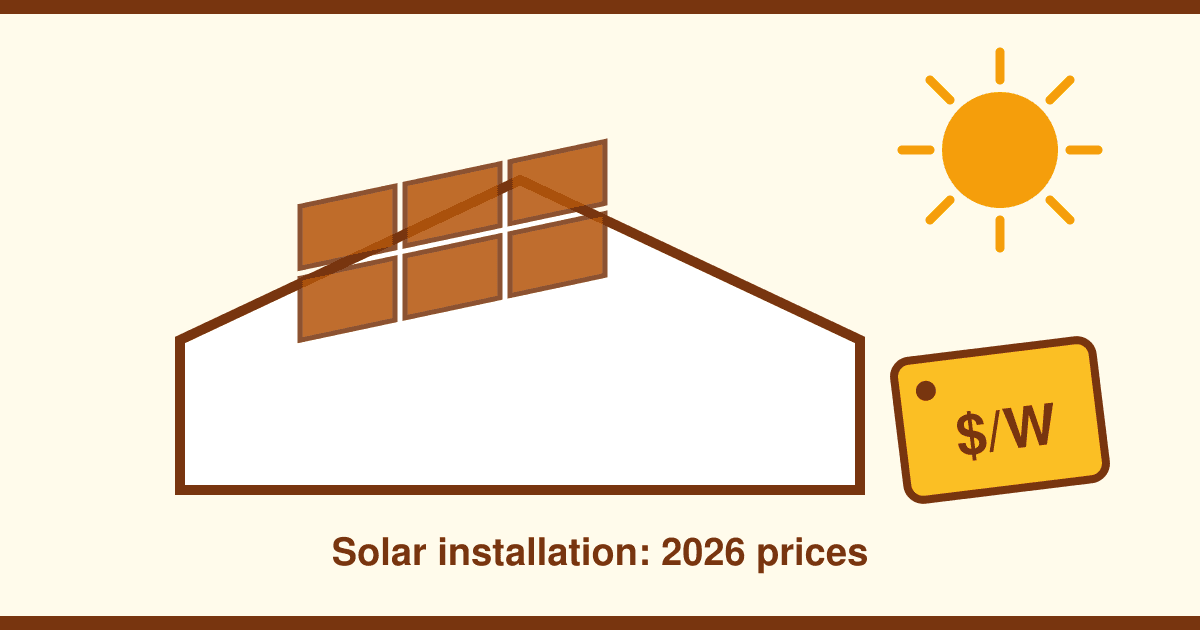
In short: After the federal STC rebate, a good-quality 6.6kW system typically costs $5,000–$8,500 installed, and a 10kW system $8,000–$10,500. As a benchmark, average residential pricing sits around $0.88–$0.95 per watt installed (including GST, after STCs).
Installed prices by system size (after STC rebate)
| System size | Typical installed price | Suits |
|---|---|---|
| 6.6kW (the Australian standard) | $4,000 – $8,500 — quality systems commonly $5,000+ | Most family homes; pairs with a standard 5kW inverter |
| 10kW | $8,000 – $10,500 | Larger homes, pools, EV charging, future battery |
| Benchmark per watt | ~$0.88 – $0.95 / W | Sense-check any quote against this |
The very cheapest end of each range usually means entry-level panels, a budget inverter and a high-volume installer. That can be a rational choice — but know that's the trade you're making. What "fully installed" does and doesn't cover is a story of its own: how to read a solar quote.
The rebate just got smaller — and will keep shrinking
Those prices already include the federal STC rebate — currently worth roughly $1,500–$2,000 on a 6.6kW system and $2,000–$3,000 on 10kW. Two things worth knowing:
- On 1 January 2026, the STC deeming period dropped from six years to five, trimming roughly $500–$600 off the rebate for a standard 6.6kW system compared with last year.
- The scheme keeps stepping down every January until it ends — so all else equal, the rebate is at its largest right now. How STCs actually work is explained here.
What moves your quote up or down
- Roof complexity: Two-storey homes, steep pitches, terracotta tiles and split arrays across multiple faces all add labour.
- Hardware tier: Premium European inverters and top-tier panels can add thousands over budget gear — and usually earn it back in longevity and warranty terms.
- Location: Metro competition keeps prices sharp; regional installs often carry travel and logistics premiums.
- Switchboard upgrades: Older boards may need work before a system can be connected — a legitimate extra, but it should be itemised, not "discovered" on install day.
Battery now or later?
A battery changes the economics — and the invoice — substantially. With feed-in tariffs at historic lows, storing your excess beats exporting it, but the payback maths deserves its own decision: what actually drives home battery payback, and why self-consumption now beats exporting. Most installers will pre-wire for a battery cheaply if you ask at quote stage.
The one non-negotiable: Only use an installer with current CEC (Solar Accreditation Australia) accreditation — it's a condition of the rebate and your main quality safeguard. How to check an installer's accreditation in two minutes.
The bottom line
Budget $5,000–$8,500 for a quality 6.6kW system and $8,000–$10,500 for 10kW, sense-check quotes against ~$0.90 per watt, and treat outliers in either direction with questions. The rebate shrinks every January — but a good installer matters more than a fast signature. Find vetted solar installers near you here.
Frequently asked questions
In 2026, a 6.6kW system typically costs $4,000–$8,500 after the federal STC rebate, with good-quality systems commonly $5,000–$8,500. The spread reflects panel and inverter tier, roof complexity and installer — benchmark any quote against roughly $0.88–$0.95 per watt installed.
The federal STC incentive is worth roughly $1,500–$2,000 on a 6.6kW system and $2,000–$3,000 on a 10kW system — already included in advertised prices. On 1 January 2026 the deeming period dropped from six to five years, reducing the rebate by about $500–$600 on a 6.6kW system, and it steps down further each January.
Not automatically — but the bottom of the range usually means entry-level hardware and a high-volume installer. Compare the panel and inverter models, warranty terms and what "fully installed" includes. A quote far below roughly $0.90 per watt deserves close questions.
With feed-in tariffs at historic lows, storing excess power increasingly beats exporting it — but batteries add thousands to the invoice and payback depends on your evening usage and tariff. A sensible middle path is to have the installer pre-wire for a battery now and add storage when the maths works for you.